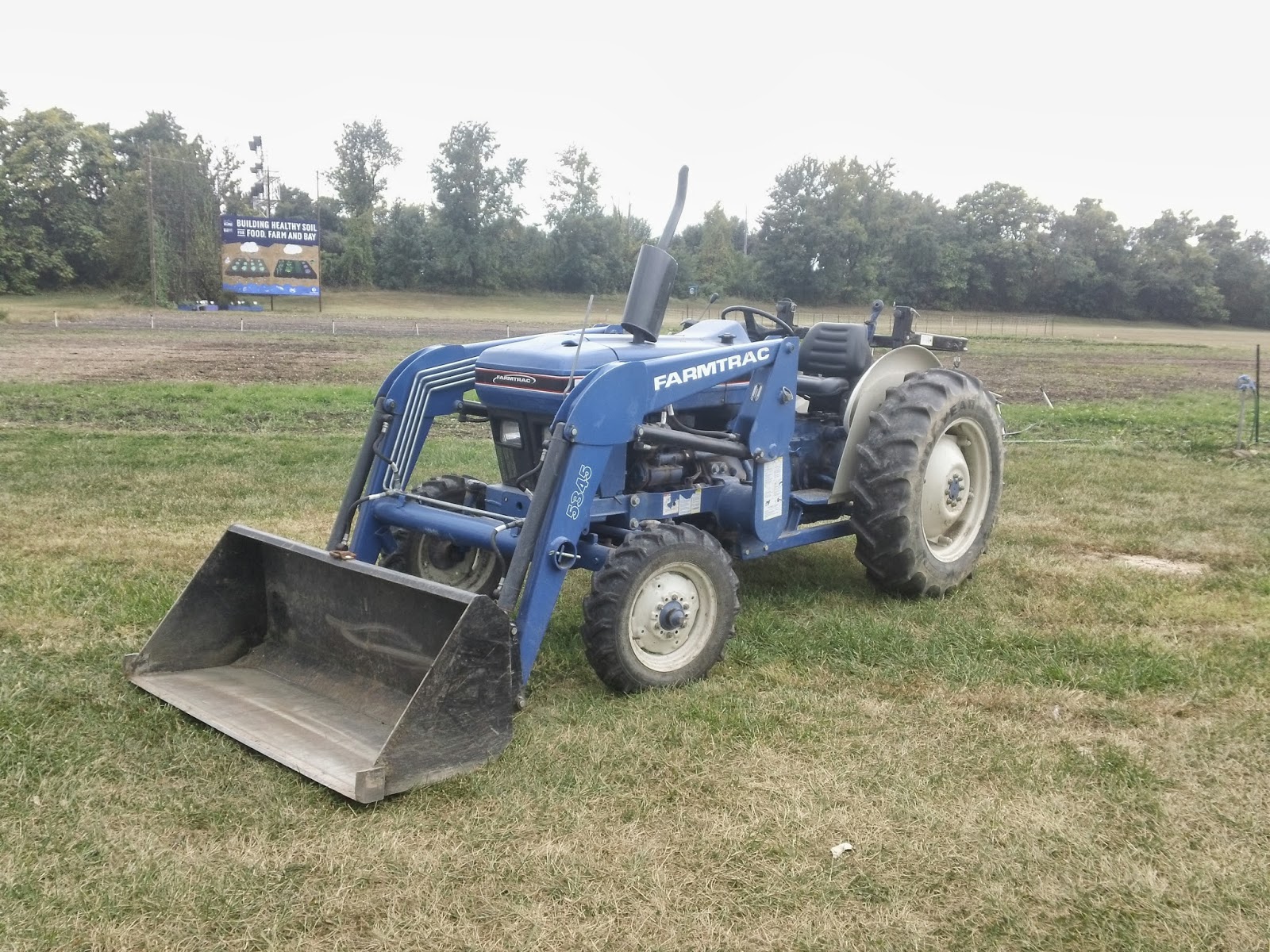
25 September 2013

3rd Annual Urban Farm & Food Fair


I had the opportunity of attending the 3rd Annual Urban Farm & Food Fair on September 21st. The rain held off long enough for me and a friend to enjoy the variety that Baltimore has to offer in its urban food system. I learned so much and was able to get some excellent resources for my masters thesis/professional project. Some of the event exhibitors included: 

Big City Farms
Compost Cab
Farm Alliance Baltimore
Friends & Farms
Future Harvest
Johns Hopkins Center for a Livable Future Aquaponics Project
Real Food Farm
Slow Food Baltimore
University of Maryland Extension's: Growing Healthy Habits
University of Maryland Extension's: Master Gardeners
University of Maryland Institute of Applied Agriculture
Whitelock Community Farm

AND I may or may not be featured in this Baltimore Sun article.


The Brick Industry Association Presents . . .

On September 12th I had the opportunity to attend an event held by The Brick Industry Association for architects and planners. It was held at M&T Bank Stadium and we were able to tour the locker room and go on the field. It was a fun learning experience and it was free (for students)! Below I share notes from the seminar, which included three speakers.


Designing Buildings and Communities for Resiliency


Masonry Resiliency: More Than Building Codes - David Biggs

Resiliency is he ability of a system yo quickly return to equilibrium after disturbance or disaster.

Resilience includes the capacity to anticipate and minimize potential destructive forces through adaptation and resistance.

Sustainable is not equal to resilient.

Characteristics of resilience:
Safety
Durability

Purpose of building codes:
To protect life, health, and safety
Minimum code standards have become defacto to design standard
Not to necessarily provide resiliency

USA Resiliency References:
Government and FEMA Documents
Insurance Industry
Construction Industry

Resilience and Post Disaster Recovery - James Schwab, Manager, APA Hazards Planning Research Center


Suggested reading: "The Resilient City"

1: The Vision of a Resilient Community
Resilience as a concept for governance
Resilience in functional and economic terms
Ability to adapt to social, economic, political, and physical change
Resiliency in the context of natural hazards

Plans for recovery after disasters
Building a local culture of disaster awareness
Providing a focus for per-disaster exercises among designated public officials
Opportunity to establish clear lines of responsibility should the need arise for long term community recovery

2: Disaster Preparedness and Recovery: Expectation and Reality
Components of disaster management
Primer on disaster preparedness
Major federal legislation discussing disaster preparedness

3: Long-term Recovery Planning: Goals and Policies
Whole community recovery (Quality of life in addition to physical rebuilding)
Opportunities for post disaster recovery
   Land use
   Infrastructure
   Housing
   Economic redevelopment

4: Long-term Recovery Planning: Process
Where and when to start
   Before & After
Leadership and collaboration
Broadening public involvement
Psychological and emotional consideration (Grieve)

5: Long :Implementation
Organization and roles
Financing implementation
Estimate milestones and timetables
Implementation as a community enterprise
Legal issues
Measuring success

6: Next Steps in Creating Resilient Communities
Resilience and the future of planning
Fostering public understanding of environmental change
Green communities and economic development
Seizing opportunities and anticipating the unexpected

Case study: Greensburg, KS

The Inherent Sustainability of Brick - Tom Liebel, Mark Thomas Architects


Economy
Brick may be more expensive at the outset but has a life span of 100+ years.

Ecology
It takes a lot of energy and fossil fuels to fire brick, but the industry is becoming more efficiency in that process. Contrarily making brick has much lower impact on water consumption, as opposed to the less expensive vinyl siding which also has great health risks.
Brick tends to be locally sourced lowering the environmental impact of shipping.

Equity
Quality of environment:
Bringing people together to create the sense of community
Bring a sense of history and permanence

Case Study: Millers Court at Howard and 26th Streets, Baltimore

11 May 2013

Leveraging Freight and Transit Assets for Sustainability

Center for Neighborhood Technology (CNT)

Using TOD (Transit Oriented Development) and COD (Cargo Oriented Development)
The Chicago Metro areas freight rail is very active. About 1/3 of all freight movement happens there.
Poorer communities with freight and rail infrastructure can be great places for COD. Supporting intermodal centers and creating jobs.

Transit: TOD Planning and Development Pipeline
Manufacturing companies consider the costs of these 3 things when shooting sites:
Workers Comp
Property Taxes
Distribution

Source
COD in Baltimore: PPP between the state of Maryland and CSX
The Port of Baltimore is both publicly and privately owned. The port predates the founding of the City. It is one of only two ports on the east coast able to accommodate the new Panamax ships. CSX currently occupies a large portion of Seagrit Port. In order to expand the port for he Panamax ships CSX has to be relocated.


Mount Clare Yard is the proposed site for the new CSX intermodal center. It is sandwiched between two residential neighborhoods but below grade. CSX has agreed to switch from diesel forklifts to all electric that will reduce noise and air pollution


Every train must go through Howard Tunnel
$6-10 billion to expand the Howard Tunnel
Built with about 20 million bricks
Does not allow double stacked trains


Source
*Source: 2013 APA National Conference Session

23 April 2013

California: Community Planning for High Speed Rail


The California High Speed Rail project is a system that would serve major cities like Sacramento, San Francisco, San Jose, Los Angeles, Anaheim, San Diego and many cities in between. .Voters approved Proposition 1A to fund the project and construction on a 29-mile segment from Madera to Fresno will begin this July. 

Benefits
Millions of green jobs
Pays or itself
Convenient, comfortable
Congestion relief
Reduces global warming
Reduces oil needs
Lowers cost of military operations

California High Speed Rail 
Phase One: SF to LA
Travel time: 2hrs 40mins
Cost estimate $40 billion (2008)
Cost estimate over $100 billion (2011)
Cost estimate $64 billion (2012) This includes utilizing existing rail lines
Benefits 
Approx 25,000 perm jobs
More property tax
Revitalized downtown 
Summary of the Planning Experience 
1. These are engineering plans, not prepared by planner
2. Get engaged early
3. Uneven benefits
4. Strong community outreach and education
5. Consider community impacts and benefits
6. Capitalize on rail investment for community improvements
7. Collaborate with other cities for effective influence

Additional information can be found here:
California High Speed Rail Authority
California High Speed Rail Blog

Source: APA National Conference Session

Chicago: Connecting Transit to Suburban Employment Centers

Pace Shuttle Bug
Click here for more information
The shuttle bug program provides services in the northeast counties of Illinois. The program is a public private partnership with companies that have job centers in suburban areas. It fills the gap between metro area services and provides a reasonable option for alternative to auto travel.


Metra Commuter Rail
Click here for more information
Operates on Amtrak and freight rail lines and reaches over 60 miles outside Chicago and all routes end in the city center


Things to consider

  • Viable routes/connections to other transit services
  • Commute type-reverse, suburb to suburb, traditional
  • Work schedule


Startup Funding Sources


  • Congestion Mitigation Air Quality (CMAQ)
  • EPA
    • 80% grant requiring 20% local match
    • 2 year term
  • Job Access Reverse Commute (JARC)
  • Competitive grant program under SAFETEA-LU


Cost Allocation to Employers


  • Develop a fair, reasonable cost allocation formula
  • Need to know corporate and public agency budget cycles to plan for funding approvals for new start up and/or annual shuttle service


Retention Criteria


  • Relevance of route
    • Steady growth of ridership
  • Funding Assured
    • Company renews commitment of financial support
  • Performance standards


Service Sustainability


  • Service changes
  • Route/schedule changes
  • Service contractions
    • Transit funding crisis
    • Closed routes


Marketing


  • On site
  • Site specific
    • Incorporate marketing into office fairs or service days (ie health and benefits fairs in for fall enrollment or earth day in spring
  • Introduce bring-a-buddy rider days to introduce potential new riders to transit


Benefits


For riders:

  • Free shuttle because employers pay shuttle assessment
  • Reduces travel costs
For planning:

  • Achieving long range planning goals
Transit agencies:

  • Increases ridership
  • Not just for commuting to work but for other activities and weekend plans
  • Return on investment


Challenges


Employers:

  • Economic conditions
    • Shuttle ridership varies
    • Employers are very cost conscious
    • Employers may cut or add jobs depending on the economy
Agencies:

  • Network issues
    • Constraints in offering earlier morning outbound trains
    • Potential duplication/parallel service
  • Decentralization of jobs
  • Suburban density issues
  • Suburban land use issues
    • Large setbacks
    • Lack or limited pedestrian infrastructure

Source: APA National Conference Session